%2Ffit-in%2F250x250%2Fguide_websites%2F1032%2Fimages%2Fimg-4569.png&w=1920&q=100)
/users/dd03793c-61bc-4c39-98bf-5bbadcdd02d9/ratecard/8805acfd-89af-475f-bfe8-2659cb133518.jpeg)
%2F300x300%2Fusers%2Fdd03793c-61bc-4c39-98bf-5bbadcdd02d9%2Fratecard%2F8805acfd-89af-475f-bfe8-2659cb133518.jpeg&w=256&q=75)
%2F300x300%2Fusers%2Fdd03793c-61bc-4c39-98bf-5bbadcdd02d9%2Fimages%2Frainbow-trout-fly-fishing-pittsburgh-8383.png&w=256&q=75)
%2F300x300%2Fusers%2Fdd03793c-61bc-4c39-98bf-5bbadcdd02d9%2Fimages%2Frainbow-trout-fly-fishing-pittsburgh-8368.png&w=256&q=75)
%2F300x300%2Fusers%2Fdd03793c-61bc-4c39-98bf-5bbadcdd02d9%2Fimages%2Frainbow-trout-fly-fishing-pittsburgh-7218.png&w=256&q=75)
%2F300x300%2Fusers%2Fdd03793c-61bc-4c39-98bf-5bbadcdd02d9%2Fimages%2Frainbow-trout-fly-fishing-pittsburgh-6883.png&w=256&q=75)
%2F300x300%2Fusers%2Fdd03793c-61bc-4c39-98bf-5bbadcdd02d9%2Fimages%2Frainbow-trout-fly-fishing-pittsburgh-6728.png&w=256&q=75)
%2F300x300%2Fusers%2Fdd03793c-61bc-4c39-98bf-5bbadcdd02d9%2Fimages%2Frainbow-trout-fly-fishing-pittsburgh-5570.png&w=256&q=75)
%2F300x300%2Fusers%2Fdd03793c-61bc-4c39-98bf-5bbadcdd02d9%2Fimages%2Frainbow-trout-fly-fishing-pittsburgh-4692.png&w=256&q=75)
%2F300x300%2Fusers%2Fdd03793c-61bc-4c39-98bf-5bbadcdd02d9%2Fimages%2Frainbow-trout-fly-fishing-pittsburgh-4422.png&w=256&q=75)
%2F300x300%2Fusers%2Fdd03793c-61bc-4c39-98bf-5bbadcdd02d9%2Fimages%2Frainbow-trout-fly-fishing-pittsburgh-4102.png&w=256&q=75)
%2F300x300%2Fusers%2Fdd03793c-61bc-4c39-98bf-5bbadcdd02d9%2Fimages%2Frainbow-trout-fly-fishing-pittsburgh-3918.png&w=256&q=75)
Premium PA Streamer Fishing | What That Vise Do
 Lake Erie
What you will be catching:
 Brown Trout
- 6-hour evening trip targeting wild brown trout and smallmouth bass
- Intensive streamer fishing techniques with all gear and dinner provided
- Maximum 2 guests receive personalized instruction from expert guide
Trip Pricing and Availabilities:
Streamer Junkie's Guide to PA Trout
Ready to chase some monster browns in the Keystone State? Lucas Smith, our resident streamer fanatic and head guide, is itching to take you on a wild ride through Pennsylvania's top trout waters. This ain't your grandpa's dry fly fishing - we're talking big flies, aggressive strips, and the heart-pounding thrill of targeting the river's apex predators. Strap in for an extended half-day adventure that'll push your casting arm to the limit and maybe, just maybe, connect you with the trout of a lifetime.
Trip Overview
This 6-hour evening expedition is tailor-made for anglers looking to level up their streamer game. We're not here to count fish - we're here to hunt trophies. Lucas brings the heat with techniques straight from Colorado River legend Bob Dye, so you know we're not messing around. You'll be slinging meat all evening long, learning the nuances of presentation, retrieve, and reading water that separate the streamer pros from the wannabes. And the best part? We've got you covered on gear and grub, so all you need to bring is your A-game and a willingness to work for those big bites.
Streamer Savvy 101
If you've never fished streamers before, buckle up buttercup - you're in for a workout. This is high-energy fishing at its finest. We're talking constant casting, stripping like you mean it, and twitching those flies to trigger savage strikes. Lucas will school you on the finer points of streamer selection, from classic patterns to the latest articulated monsters. You'll learn how to work different water types, from riffles to deep pools, and how to adjust your retrieve to match the mood of the fish. And when that big brown slams your fly? Trust me, you'll be hooked for life.
Why Anglers Dig It
Let's be real - streamer fishing isn't for everyone. It's demanding, sometimes frustrating, and can test your patience. But for those who catch the bug, there's nothing quite like it. Our regulars keep coming back for that addictive mix of anticipation and adrenaline. Every cast could be the one that brings a behemoth to hand. Plus, with Lucas at the helm, you're not just fishing - you're getting a master class in reading water, understanding trout behavior, and perfecting your streamer game. It's like a front-row seat to the coolest fishing seminar you've ever attended, except you're knee-deep in prime Pennsylvania trout water.
Brown Trout Breakdown
Ah, the brown trout - the crown jewel of Pennsylvania's rivers and the ultimate prize for streamer junkies. These fish are the reason we brave cold waters and sore arms. Browns in PA can grow to impressive sizes, with fish over 20 inches not uncommon in the right waters. They're known for their predatory nature, often switching to a diet of smaller fish as they grow larger. This makes them perfect targets for our streamer tactics.
Brown trout are creatures of habit, often holding in the same lies day after day. They're most active during low light conditions, which is why we hit the water in the evening. Spring and fall are prime times to target big browns, as they bulk up for spawning or recover afterward. But don't sleep on summer evenings - a well-placed streamer can still entice a monster to leave its lair.
What makes brown trout so exciting to catch on streamers? It's all about the take. When a big brown decides to eat, it's not a gentle sip - it's a violent, heart-stopping smash that'll make you question if you just hooked a submarine. And once hooked, these fish fight dirty, using every rock and log in the river to try and shake free. Landing a trophy brown on a streamer is a test of skill, nerves, and sometimes pure luck - and that's exactly why we love it.
Time to Get Streamin'
Look, we could talk all day about the ins and outs of streamer fishing, but at some point, you've gotta get out there and sling some meat yourself. This extended half-day trip with Lucas is your ticket to the big leagues of Pennsylvania trout fishing. Whether you're a streamer newbie looking to expand your skillset or a seasoned pro chasing that next personal best, we've got the knowledge, the gear, and the water to make it happen. Spots are limited to just two anglers per trip, so don't sleep on this opportunity. Book your slot now, and get ready to experience the rush of Pennsylvania's wildest brown trout action. Trust us, once you've felt the brutal strike of a trophy brown on the end of your line, you'll never look at trout fishing the same way again.
Learn more about the animal
Brown Trout
Brown Trout (Salmo Trutta) Description
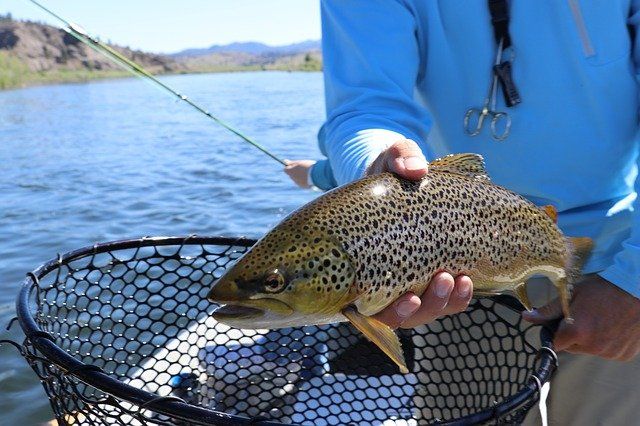
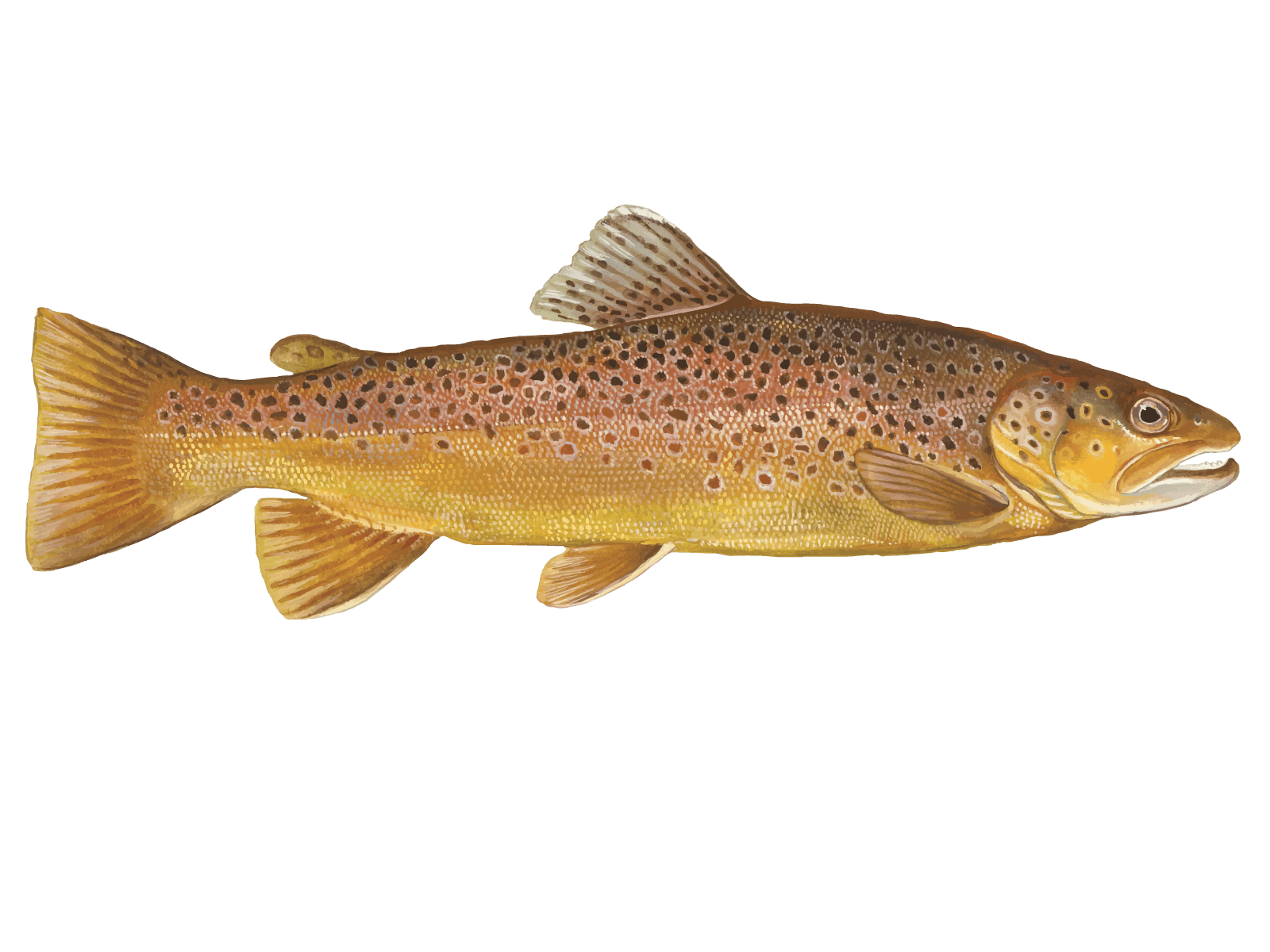
Brown Trout are medium-sized premier cold-water game and sport fish. It has been introduced in suitable environments globally and is considered the backbone of many fisheries. These fish have brown or golden-brown backs and a yellowish or white belly. The back and sides are covered with black spots. Head and tail are sometimes spotted. There is a small reddish or orange adipose fin near the tail. Brown trout can be distinguished from similar salmon by their vomerine teeth.
Brown trout resembles Brook trout, Chinook salmon, Coho salmon, and Rainbow trout.
Brown Trout Size and Weight
The average size for this fish is 8-24 inches but can grow up to 39 inches depending on the habitat. They can weigh from 1 – 9.5 pounds.
When were Brown Trout Introduced in the United States?
Brown trout, a native of Europe and Asia, was first introduced to the United States in 1883. The species was brought to Michigan by Fred Mather, a fish enthusiast who believed brown trout would be an excellent addition to American waters. The introduction of brown trout was met with great excitement by anglers across the country, as this species is known for its fighting ability and delicious taste.
Since its introduction over a century ago, brown trout has become one of the most popular game fish in the United States. Today, it can be found in almost every state and is especially abundant in western rivers and streams. One of the reasons for its success is its adaptability - brown trout can thrive in cold and warm water environments.
To keep up with the demand from anglers, many states have implemented stocking programs to increase brown trout populations.
Interesting Facts
The Brown Trout live for 12 years but can have an extended life span of up to 18 or 20 years.
Brown trout can be found on almost every continent except Antarctica and many can be found living in the ocean.
They are stocked in 45 states as it's a popular game fish. They are self-sustaining in 34 states.
The Brown Trout is a Guidesly employee favorite to catch on a run!
Where do Brown Trout Live in the United States?
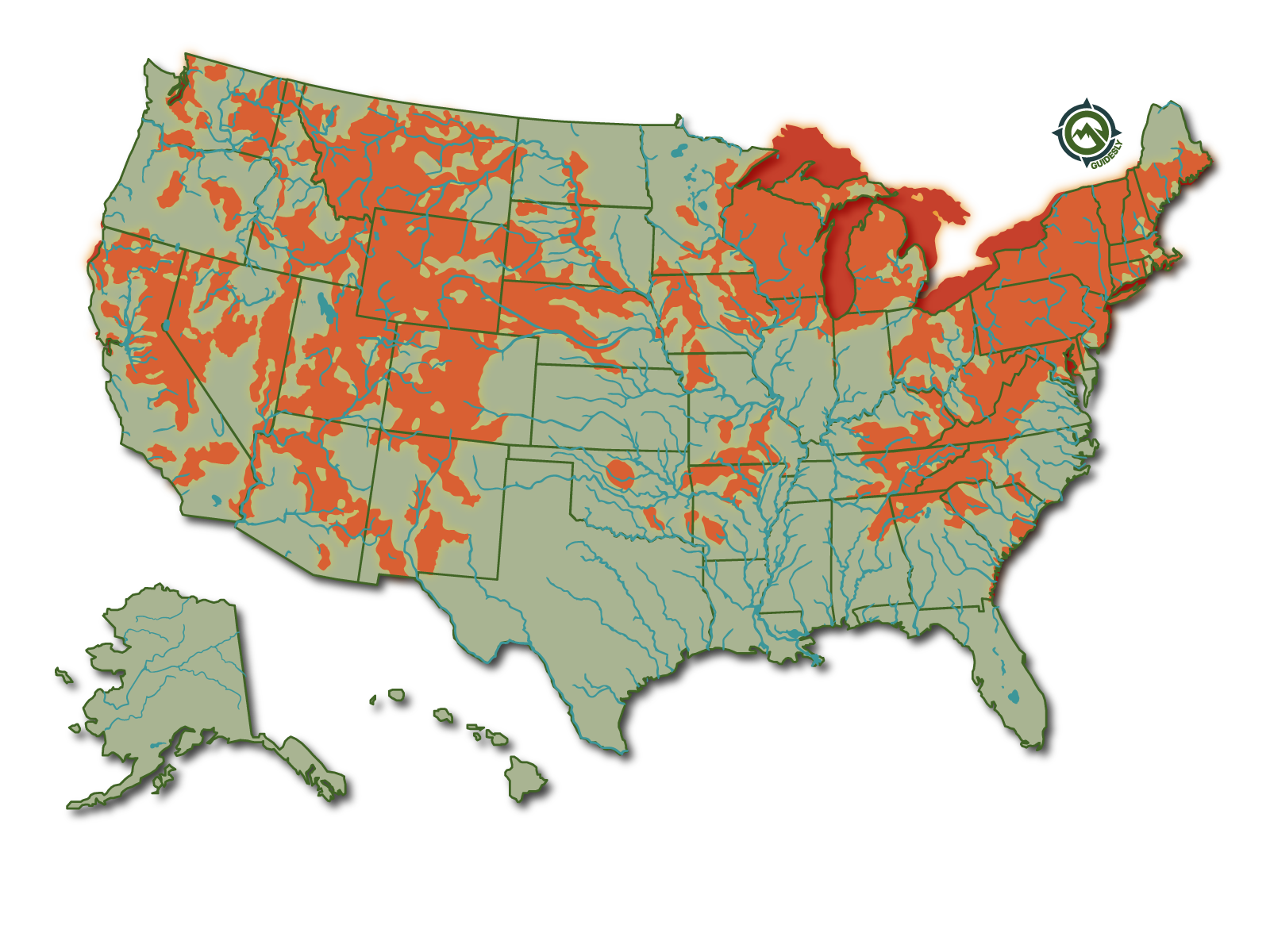
Brown Trout prefers to live in covers and cool, clear, and calm waters. A temperature of 54°F to 65°F is ideal for these fishes but can survive up to 75°F. Sea trout travel to brackish or ocean waters and return to freshwater for spawning. Found in small streams, large rivers, and any trout stream with the right water temperature, aquatic insects, and clean water. This species is usually restricted to freshwater, though a few migrate to the sea between spawnings.
Widely distributed, the Brown Trout can be found throughout 45 states and Canada.
Spawning
The spawning season for these fish starts in fall and early winter. River trout look for a head riffle or a freshwater stream to spawn. The site is dug by the females, where the eggs are laid and covered with gravel. Hatching occurs in spring.
Diet
Brown trout consume aquatic insects, salamanders, frogs, worms, crustacean mollusks, and other fish. In the sea, they eat alewives and other small fish.
Are Brown Trout Good to Eat?
Many people enjoy catching brown trout for sport, others wonder if it's good to eat. The answer is yes, brown trout can be a delicious and healthy addition to your diet.
The taste of brown trout depends on various factors, such as the quality of the water they inhabit, their diet, and how they are cooked. Generally speaking, brown trout has a mild flavor that is slightly sweet with a firm texture. It's often compared to rainbow trout or salmon but with a milder taste.
To cook brown trout, you can grill it with some lemon juice and herbs for added flavor. Pan-frying or baking are also great options that allow the natural flavors of the fish to shine through. Just make sure not to overcook it, as this can result in dry and tough meat.
Fishing Techniques - How to Catch Brown Trout
During the fall season, Brown Trout feed aggressively at night. They can be found in deep pools, overgrown vegetation, or hiding near rocks. Many anglers recommend fishing for them near piers, while others only consider fly fishing in streams. For fly fishing, dry fly or crawfish imitation can be used. A fly rod of 9 ft. length and 5 weight will wield for excellent results. They can use a line of 4-6 weight.
On the Great Lakes, trolling is an ideal option, or small spinners or baits can be used under a floater. Popular baits and lures used are streamers, woolly bugger, pheasant tail nymph, crayfish, and green caddis.
About the Hooligan
%2F%2Fusers%2Fdd03793c-61bc-4c39-98bf-5bbadcdd02d9%2Fboat_picture%2Fholigan%2520raft.jpg&w=1920&q=75)
Vehicle Guest Capacity: 3
Manufacturer Name: N/A
Maximum Cruising Speed: 5
Number of Engines: 1
Horsepower per Engine: 5